Quality assurance software you can trust.
Brellium automatically audits CTI documentation, face-to-face encounters, and nursing visit notes against Medicare Conditions of Payment and OIG audit criteria — before a claim is submitted. No more compliance gaps. Just real-time insight into hospice documentation quality and care.
Get a DemoTrusted by leading hospice organizations & associations

Hospice Care is Under Scrutiny
Hospice organizations face intensifying scrutiny from MACs, UPICs, and CMS, with face-to-face encounter documentation and terminal prognosis justification as top audit targets. Manual review doesn't scale.
A single documentation gap can trigger the denial of an entire benefit period, putting months of revenue at risk per patient. The organizations that survive this are building systems that catch issues before claims go out the door.

Brellium is Built to Respond
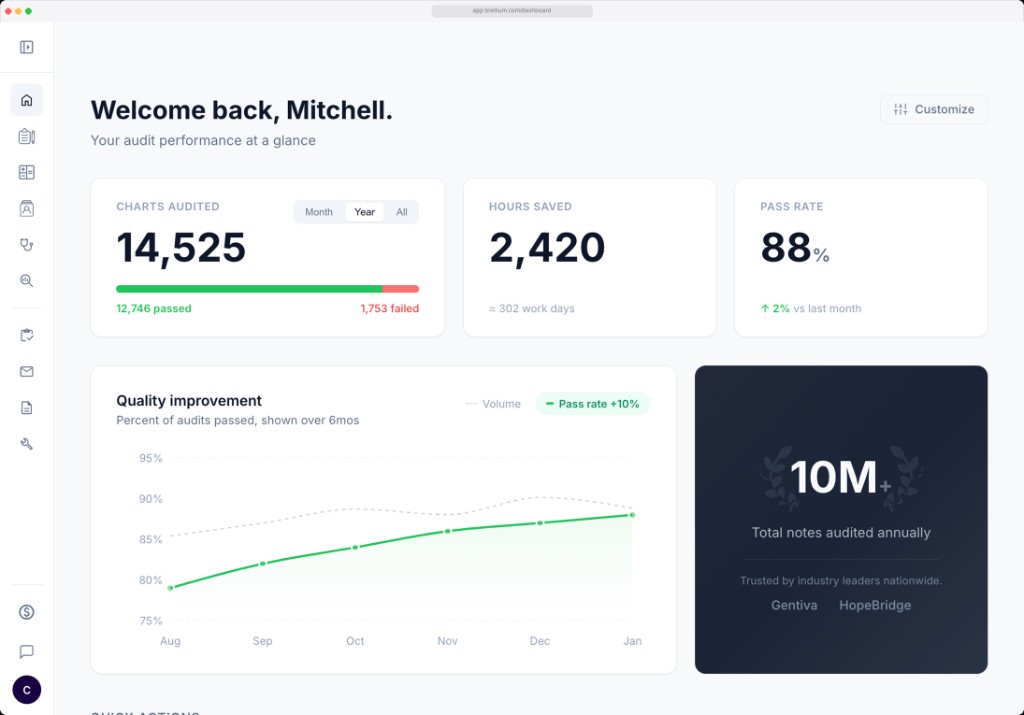
Brellium Catches Hospice Compliance Risks — Before CMS Audits
Insufficient Clinical Justification for Terminal Prognosis
OIG-HHS has identified inadequate terminal prognosis documentation as a top audit target. Brellium validates that every certification includes specific, measurable clinical decline indicators.
F2F Encounter Timing & Documentation Gaps
Flag patients approaching or past face-to-face encounter deadlines, preventing certification gaps that trigger denials and are a primary focus of Medicare auditors.
Visit Notes Lacking Individualized Care Evidence
Detect visit notes that use templated or generic language instead of documenting patient-specific observations, interventions, and responses — a growing audit focus area.
GIP Level of Care Without Acute Symptom Evidence
Catch general inpatient care documentation that lacks required evidence of acute symptom management needs, a high-risk area for clawbacks under federal scrutiny.
Hospice compliance insights
Rooted in the Community: How Brellium Is Building a Presence in Hospice
Brellium has joined a growing network of hospice and home care associations to be in the room where decisions shaping end-of-life care get made.
Read more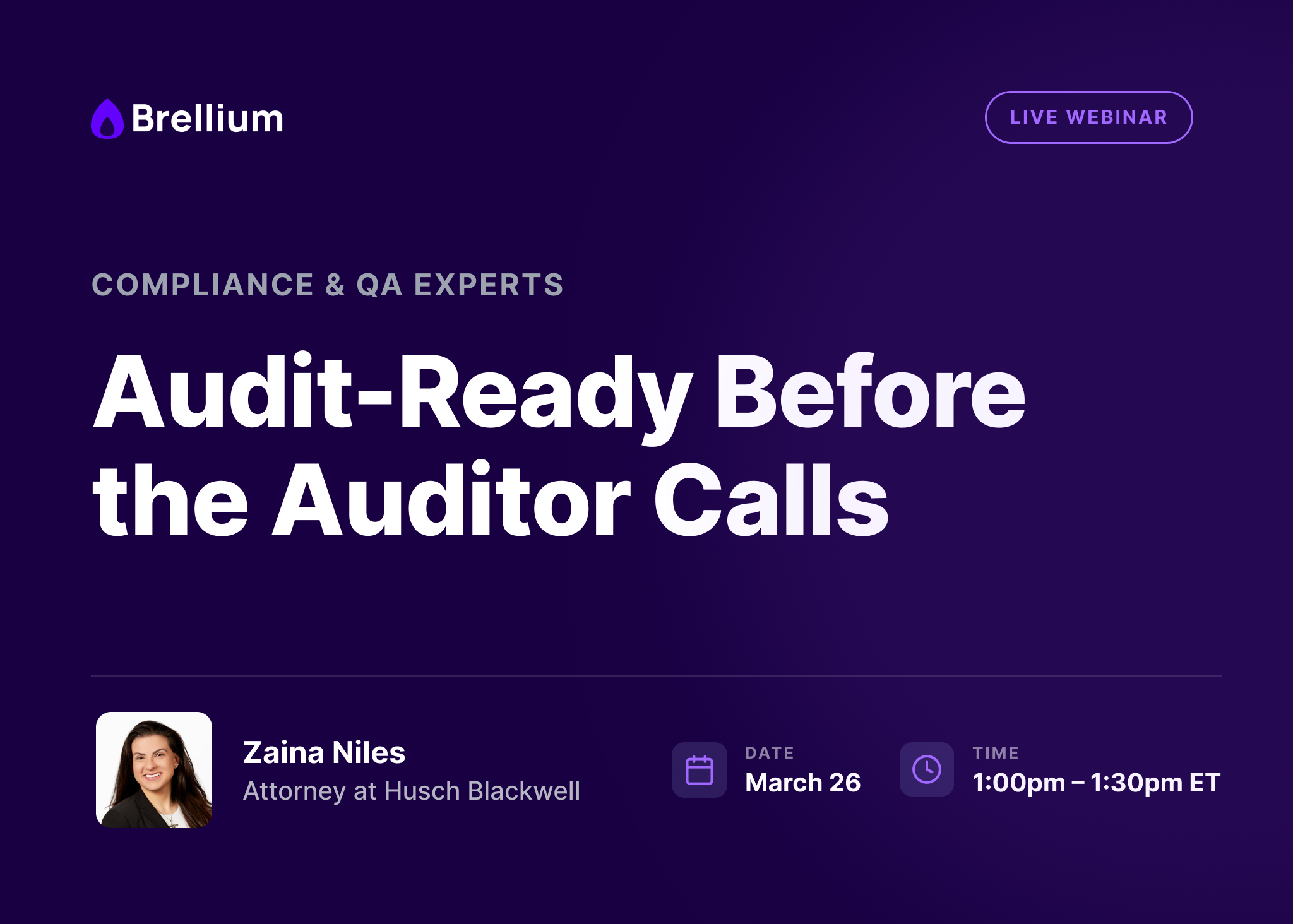
Audit-Ready Before the Auditor Calls
Your hospice could be audited next. Here's how to make sure you're ready.
Watch now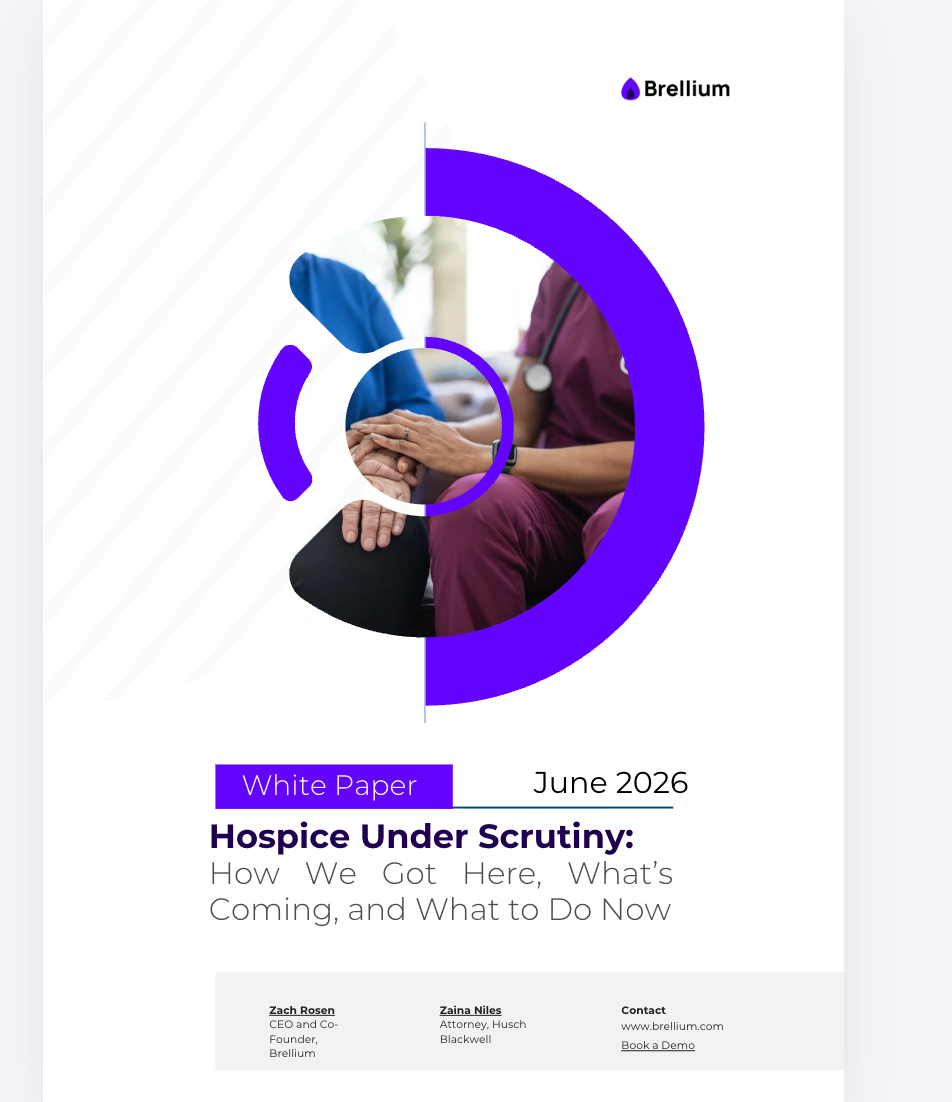
Hospice Under Scrutiny: How We Got Here, What’s Coming, and What to Do Now
Brellium partnered with Husch Blackwell to break down the war on hospice fraud, charting the events that have led to the current compliance moment and outline steps providers should take now.
Learn moreMeasurable impact from day one
Healthcare organizations that switch to Brellium see transformational improvements in compliance, cost, and clinical quality.
Frequently asked questions
Partner with Brellium to stay ahead of OIG hospice audits
With OIG-HHS ramping up hospice audit activity, proactive compliance is no longer optional. See how Brellium can help your organization audit for quality — not just presence.